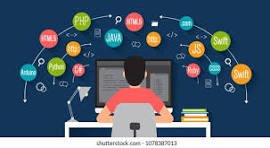
What is a Programming Language?
A programming language is a set of instructions and rules that allows humans to communicate with computers. It enables developers to write code that the computer can understand, interpret, and execute. Programming languages are the foundation of all software – from mobile apps and websites to artificial intelligence and operating systems.
Types of Programming Languages
Programming languages are categorized in several ways, mainly based on abstraction level, execution model, and use case.
1. Low-Level Languages
These are close to machine code (binary 0s and 1s). They are fast and efficient but harder to learn.
- Machine Language: The lowest-level language, directly understood by hardware. Written in binary.
- Assembly Language: Uses mnemonics (e.g.,
ADD,MOV) instead of binary. Requires an assembler to convert into machine code.
Use Case: System programming, embedded systems, device drivers.
2. High-Level Languages
These are closer to human languages and easier to learn. They are platform-independent and widely used for application development.
- Examples: C, C++, Java, Python, Ruby, PHP, JavaScript.
- They need compilers (C, C++, Java) or interpreters (Python, JavaScript) to run.
Use Case: Web apps, desktop apps, mobile apps, business software.
3. Procedural Programming Languages
Focuses on step-by-step instructions to solve problems. Uses functions, loops, and conditionals.
- Examples: C, Fortran, Pascal.
- Programs are structured as procedures (functions).
Use Case: Scientific calculations, structured programming, legacy systems.
4. Object-Oriented Programming (OOP) Languages
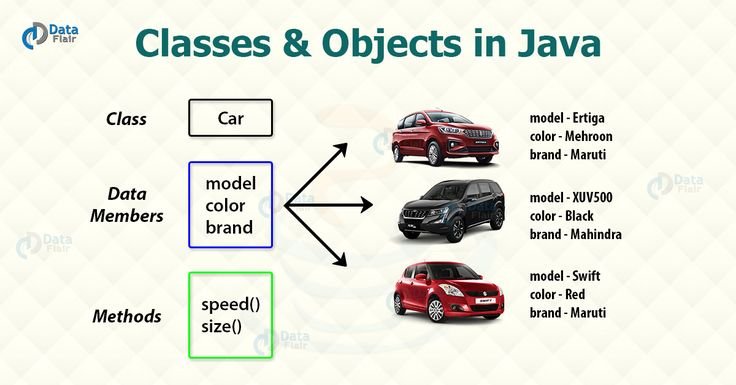
Based on objects (real-world entities) that contain data (attributes) and behavior (methods). Promotes reusability and modular design.
- Examples: Java, C++, Python, C#, Ruby.
- Uses principles like encapsulation, inheritance, polymorphism, abstraction.
Use Case: Large-scale applications, enterprise systems, Android apps.
5. Functional Programming Languages
Focuses on mathematical functions. Programs are written as pure functions without changing state (no side effects).
- Examples: Haskell, Lisp, Scala, Erlang.
- Emphasizes immutability and recursion.
Use Case: AI research, data analysis, concurrent systems.
6. Scripting Languages
Used for automating tasks and controlling other software. Often interpreted rather than compiled.
- Examples: JavaScript, Python, PHP, Perl, Shell Script.
- Lightweight and fast for writing small programs.
Use Case: Web development, automation, server-side scripts, DevOps.
7. Markup & Query Languages (Not traditional programming, but widely used)
- HTML/XML – Defines structure of web content.
- SQL – Manages and queries databases.
- CSS – Styles web pages (not a programming language, but used with HTML).
Use Case: Web development, data management.
8. Emerging & Domain-Specific Languages
- R & MATLAB – Statistical and scientific computing.
- Swift & Kotlin – Mobile app development.
- Rust & Go – System programming, high-performance apps.
- VHDL/Verilog – Hardware description languages.
Why So Many Languages?
Each language is designed with a purpose:
- C → speed & efficiency.
- Python → simplicity & rapid development.
- JavaScript → interactive websites.
- SQL → databases.
- Rust → safety & performance.
No single language is “best” – developers choose based on the project’s goals.
Future of Programming Languages
- AI-driven coding assistants (like GitHub Copilot) are reshaping development.
- Languages like Rust, Go, and Julia are growing fast.
- Low-code & no-code platforms may reduce the need for manual coding but won’t replace core languages.
Leave a Reply